United States of America is consistently facing economic pressure nowadays. Rising consumer prices, increased debt, increased interest rates, and high energy prices are putting pressure on the American economy just before the midterm elections. Although the labour market and the stock market have shown some strong and consistent results, many households are struggling to live with everyday costs (US economy 2026).
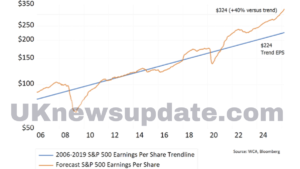
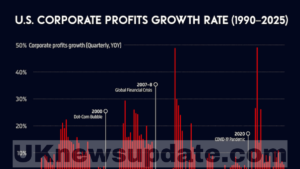
United States is approaching its midterm elections on November 3, amid debate over the condition of its economy. President Trump has used evidence of stock market growth and profits to show high performance under his administration. However, the recent data reveals a totally different picture. The increase in debt, accelerating debt, slowing employment growth, and an increase in borrowing costs reveal a different economic picture (US economy 2026).
Now the economic debate matters because the voters are already facing difficulties due to fuel prices, housing, and transport. At the same time, the federal government is facing difficulty in debts, which raises questions about whether the government policies will be stabilizing in the future US economy 2026).
The November elections will determine control of Congress, where candidates will use economic policies as central points for persuading the voters. The administration already argues that its policies can support growth. The critics argue that the policies can benefit the ordinary American citizen or not (US economy 2026).
Inflation remains a major challenge for American households
Inflation is the major problem that every ordinary citizen of America is facing. According to the data released by the U.S. Labor Department on October 4, the Consumer Price Index (CPI) rose 3.7%. Prices also increased 0.6% in the months of September and August, making it the largest rise in five months (US economy 2026).
This increase reflects pressure from several parts of the economy. This pressure is from fuel prices, a rise in goods prices, and expenses related to housing and services. The conflict involves war with Iran making the prices of energy go high.
High fuel prices are a major factor in the rise in goods prices. Inflation increases because of the increase in energy prices. When transport prices rise, it also makes goods expensive. The expenses become a burden on ordinary consumers. This contributes to high prices of groceries, consumer products, and other necessities (US economy 2026).
Inflation also creates challenges for policymakers. The target of the federal reserve to make the inflation constant at 2%. When the prices rises faster than the expected rates the central bank determine weather to make the monetary policies tigther or not.
Rising interest rates also make borrowing costs expensive
The cost of borrowing is another major concern for the American government. Higher interest rates make things more expensive, including the payments on mortgages, vehicle loans, credit cards, and other types of credit.
Ordinary citizens face difficulties paying their mortgages at these interest rates. On the other hand, high inflation also creates problems for paying car loans and any other type of credit. Reuters reported in mid-October that the average rate on a 30-year fixed-rate mortgage had reached approximately 7.5%, its highest level in nearly three years (US economy 2026).
Businesses also face problems when taking money out of banks to invest and expand the business. Small industries, on the other hand, do not operate under these conditions because they don’t have money and are not able to take loans from the banks to invest.
Higher borrowing costs affect the Federal Reserve as well. The US Treasury has already hit 40 trillion dollars this month. Increasing interest rates can put more burden on the taxpayer to recover from the debts.

Conclusion
As the United States approaches the 2026 midterm elections, economic conditions present both encouraging signs and significant challenges. A resilient labor market and strong stock market performance offer reasons for confidence, but elevated inflation, rising borrowing costs, and a $40 trillion federal debt burden continue to raise concerns.
The election campaign has placed these competing realities at the center of national debate (US economy 2026).
The policies pursued by the administration and Congress will help shape the economic outlook, but their effectiveness will ultimately be judged by their impact on employment, household finances, and long-term financial stability.
For voters, the key issue is not simply whether the economy is growing, but whether that growth translates into a more affordable and financially secure life.
You can also get information about
Economic consequences of Russia sanctions: Trump decided to lower the tariffs on Russia
US Treasury Debt: How the United States is going to pay the debts